AI Platforms • Executive Briefing
Inside Gemini Enterprise: SKUs, Architecture, and Why It Matters for CIOs
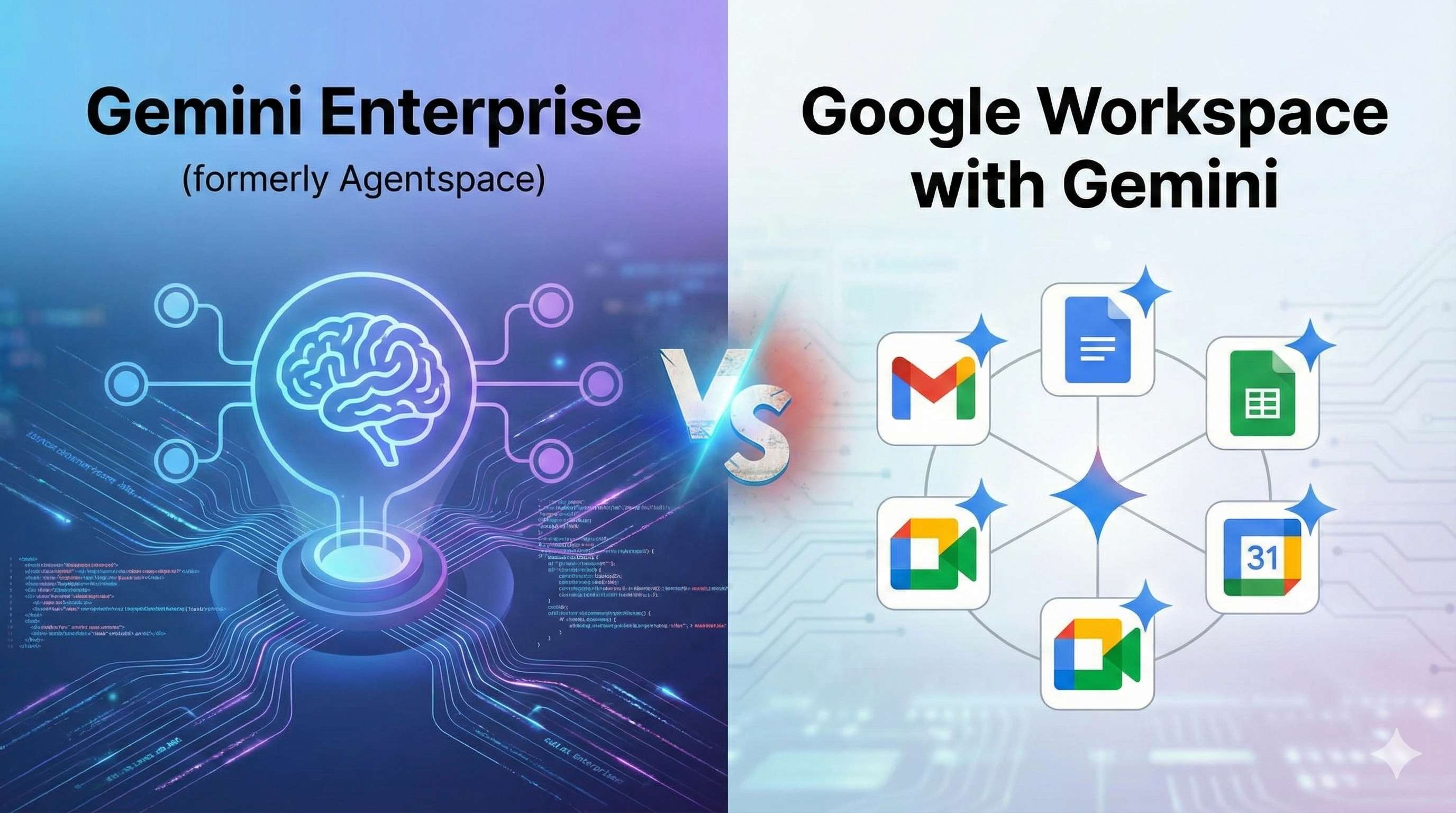
Before we begin: What is Gemini?
Gemini is Google’s family of generative-AI models and tools used across products—from search and code to productivity and cloud. It’s a unified, multimodal engine that can reason over text, code, and images to assist users and applications.
Google Workspace with Gemini brings those capabilities into Gmail, Docs, Sheets, Slides, and Meet. Think of it as a personal AI collaborator that helps people write, summarize, analyze, and present—licensed per user inside Workspace.
Gemini Enterprise (formerly Agentspace) is the enterprise platform to design, secure, and operate AI agents and apps across your systems. It provides the control plane—policies, evaluation, observability, and SDKs—to build and run production-grade assistants at scale.
Why this matters now
Google has consolidated its enterprise agent platform under the Gemini Enterprise brand (formerly Agentspace). This clarifies how the platform differs from Google Workspace with Gemini (the in-product assistant). For CIOs, the distinction affects funding models, ownership, and governance.
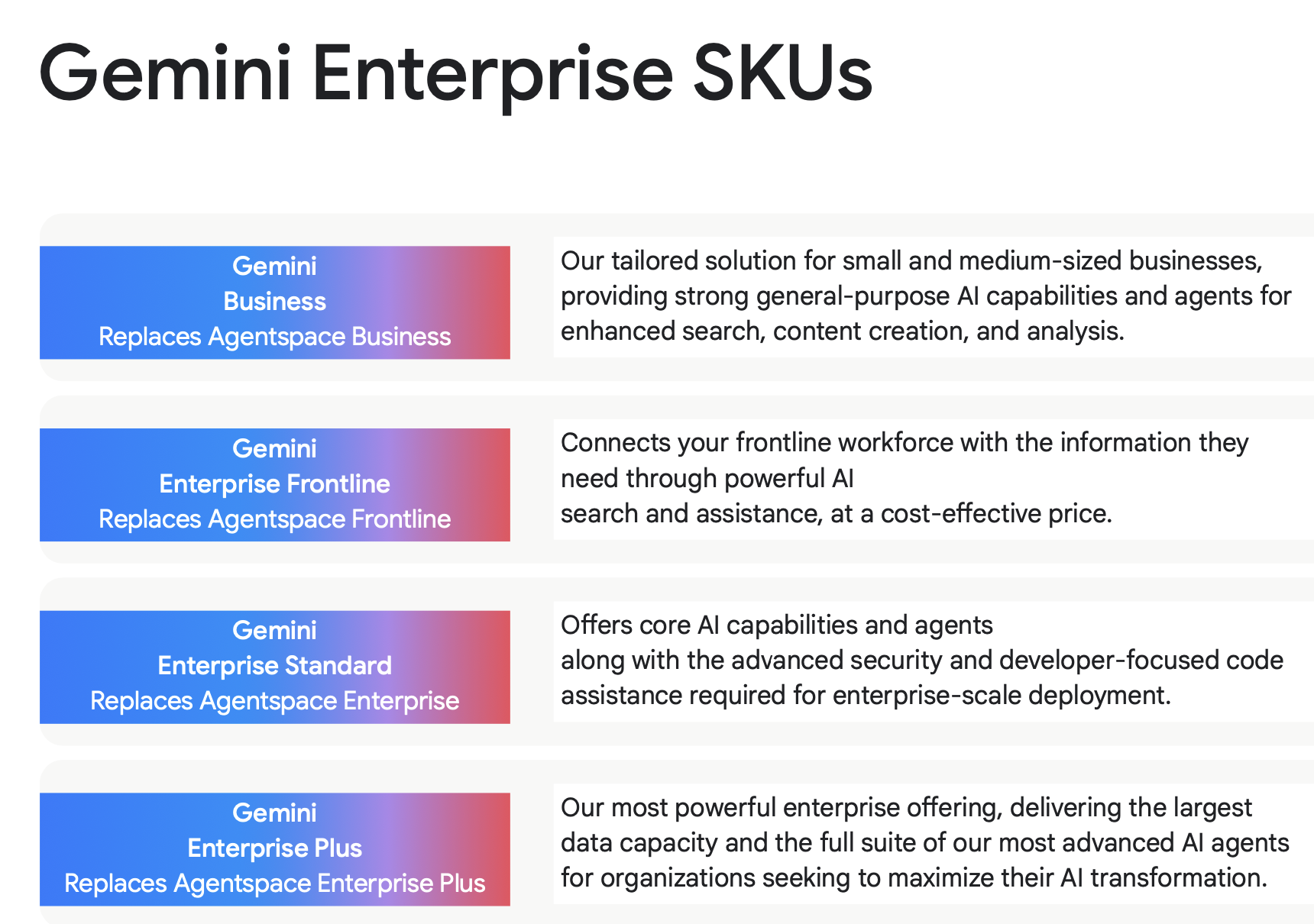
SKU overview: pick the right tier
Use this to align stakeholders on which tier maps to your goals and scale.
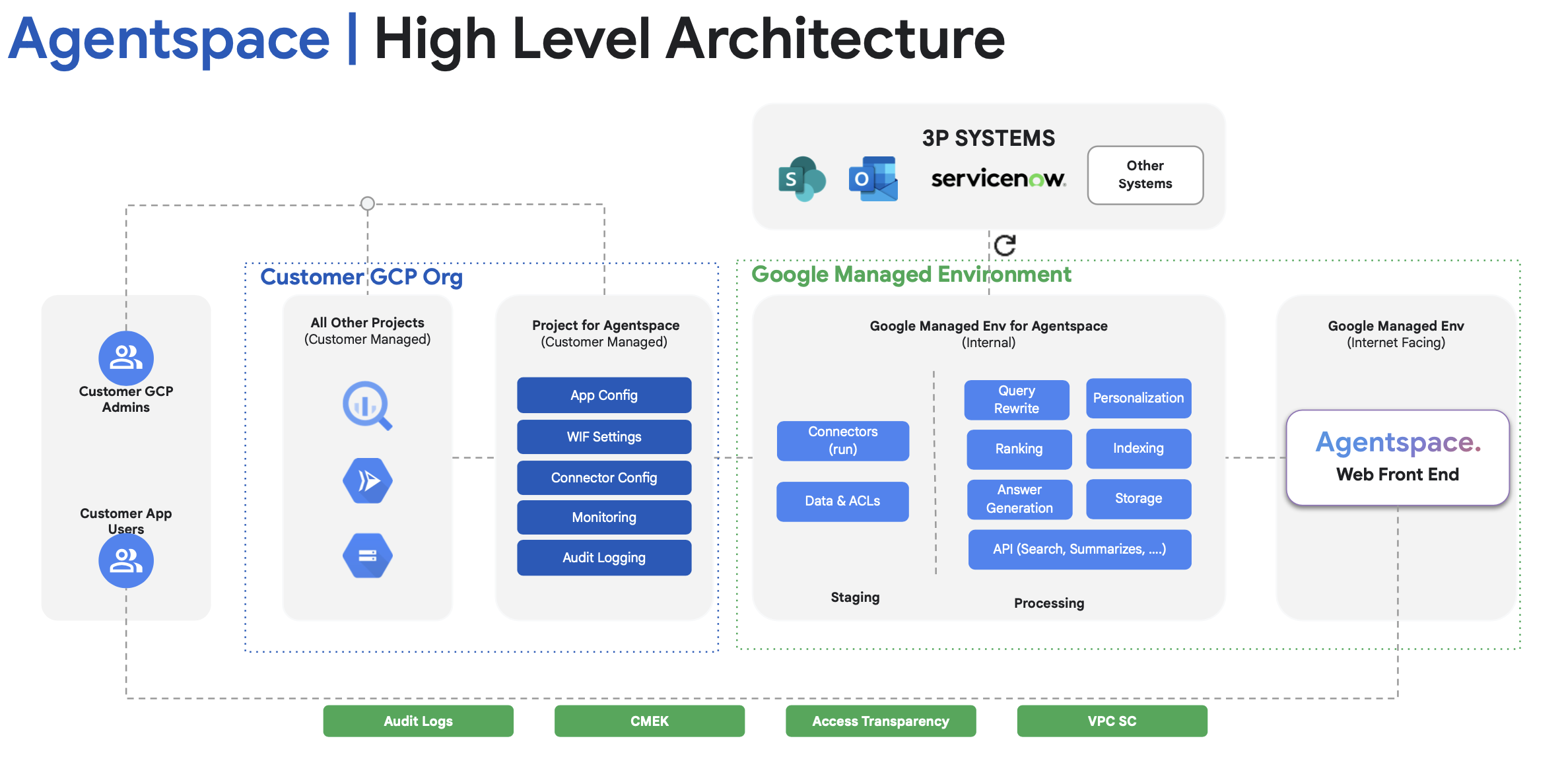
Architecture at a glance
The diagram highlights boundaries between customer-managed and Google-managed responsibilities, how connectors expose data to agents, and where you configure policies, evaluation, and deployments.
How it differs from Workspace with Gemini
- Platform vs Assistant: Enterprise is a control plane for building/operating agents; Workspace is an assistant inside productivity apps.
- Governance: Enterprise includes fine-grained policies, evaluation, and audit; Workspace aligns to Workspace admin controls.
- Extensibility: Enterprise exposes SDKs, CI/CD & test harnesses; Workspace offers Apps Script and add-ons.
- Licensing: Enterprise is platform/service oriented; Workspace is per-user.
Rule of thumb: If you're building agents/apps that touch line-of-business systems, fund Gemini Enterprise. If you want productivity gains in Gmail/Docs/Slides, license Workspace with Gemini.
Execution plan for CIOs
- Stand up a platform squad: own connectors, policy guardrails, evaluation, and the release process.
- Pick 2–3 lighthouse use-cases: one internal, one external/customer-facing; measure ROI and safety incidents.
- Establish shared controls: Access Transparency, VPC-SC, CMEK, org policies, and incident playbooks.
- Developer enablement: blueprints, sample agents, CI/CD templates, and a prompt/artifact registry.